How to Scale Ad Campaigns Without Killing ROAS
Every brand running profitable ads faces the same challenge: spending more without earning less per dollar. The first $1,000/day is profitable at 4x ROAS. At $5,000/day it drops to 2.5x. At $10,000/day you are fighting to stay above breakeven. This compression is not inevitable — it is a symptom of scaling without the right systems.
Why ROAS Drops When You Scale
Three forces work against you as spend increases:
Audience saturation. Your best-performing audiences are small. At low budgets, you only reach the most responsive people. Scaling forces the algorithm to reach progressively colder audiences who are less likely to convert.
Creative fatigue. Higher spend means higher frequency. The same ad shown to the same person multiple times loses effectiveness. Click-through rates drop, cost-per-click rises, and conversion rates decline.
Algorithm inefficiency. Rapid budget increases disrupt the platform’s learning phase. The algorithm optimized for one budget level needs time to re-learn delivery patterns at a higher level. Jump from $500/day to $2,000/day overnight and expect 2–3 days of volatile performance.
Understanding these forces turns scaling from a guessing game into a systematic process.
Strategy 1: Gradual Budget Increases
The most reliable scaling approach is boring: increase budgets by 15–20% every 3–5 days.
Day 1–5: $1,000/day (baseline ROAS: 3.5x) Day 6–10: $1,200/day (watch for ROAS stability) Day 11–15: $1,440/day (if ROAS holds within 15% of baseline, continue) Day 16–20: $1,730/day (same check)
If ROAS drops more than 20% at any step, hold at the current level for 5–7 days before trying again. The algorithm needs time to find efficient delivery at each new spend level.
What to avoid: Doubling budgets in a single day. This triggers the platform’s learning phase reset, causes CPM spikes, and almost always tanks short-term performance.
Strategy 2: Creative Volume as a Scaling Lever
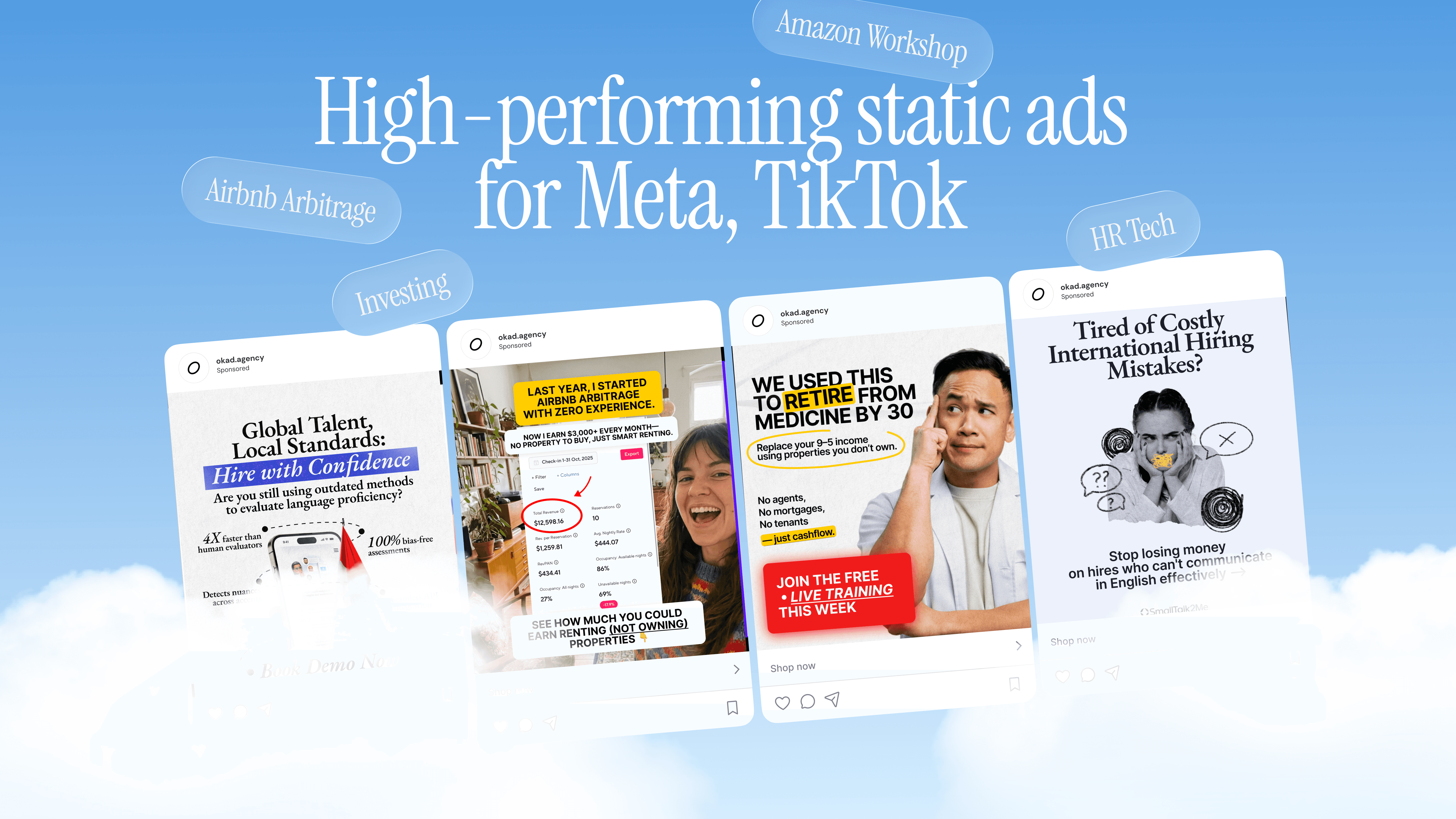
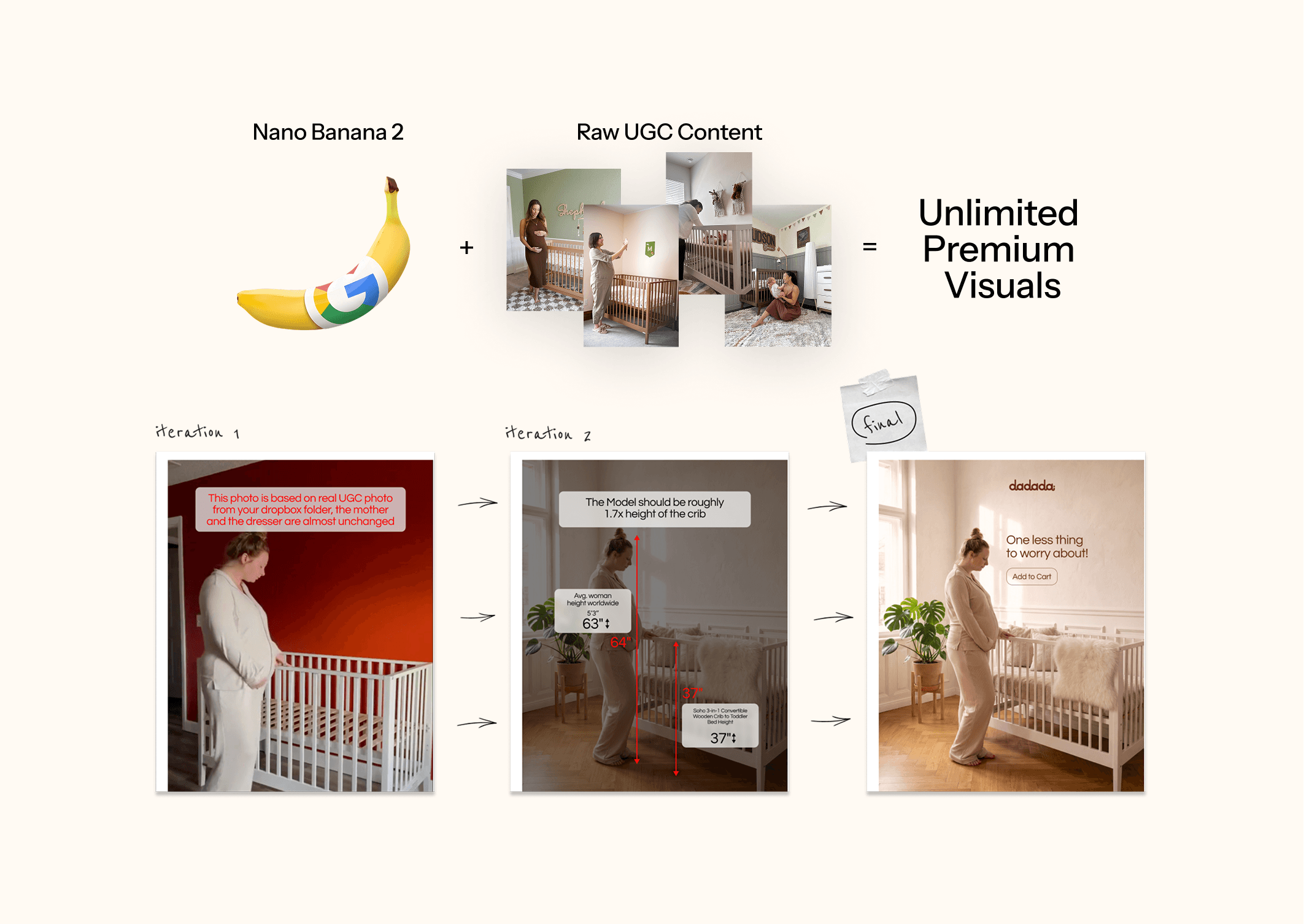
The single biggest factor in maintaining ROAS at scale is fresh creative. Not slightly different creative — genuinely new concepts, hooks, and formats.
The creative math:
At $1,000/day spend, you need 3–5 active ad variations. At $5,000/day, you need 10–15. At $10,000/day, you need 20–30.
This is not arbitrary. Each ad variation fatigues at roughly the same rate (measured in impressions, not time). More spend = more impressions per day = faster fatigue. More variations distribute impressions across creative, extending the life of each asset.
Creative refresh cadence:
- $1K–$3K/day: New creative every 2 weeks
- $3K–$7K/day: New creative weekly
- $7K–$15K/day: 2–3 new concepts per week
- $15K+/day: Continuous creative pipeline (daily new assets)
This is where UGC and canvas UGC become essential for scale. Studio production cannot match the volume requirement. A team of 5–10 UGC creators producing weekly assets gives you the creative pipeline that scaling demands.
Strategy 3: Audience Expansion (Not Just Broader Targeting)
When your core audience saturates, you have two options:
Option A: Go broader on the same platform.
- Expand lookalike audiences from 1% to 3% to 5%
- Add interest-based targeting adjacent to your core audience
- Test broad targeting with strong creative (let the algorithm find buyers)
Option B: Go to new platforms.
- Winning on Meta? Test the same offers on TikTok.
- Strong on TikTok? Expand to YouTube Shorts.
- Each platform has distinct audiences with different saturation points.
The second option is generally more effective because you reach genuinely new people rather than less qualified versions of the same audience.
Strategy 4: The Campaign Structure for Scale
Organizing campaigns for scaling requires separation:
Testing campaigns (10–20% of budget)
- New creative variations
- New audiences
- New offers
- Small budgets, fast iteration
Scaling campaigns (60–70% of budget)
- Proven creative (2+ weeks of positive ROAS)
- Proven audiences
- Gradual budget increases
- This is where the money works
Retargeting campaigns (15–25% of budget)
- Website visitors, cart abandoners, engagers
- Different creative than prospecting (product-specific, urgency-driven)
- Scales proportionally with prospecting spend
This structure prevents new tests from disrupting proven performers and ensures you always have a pipeline of tested creative ready to move into scaling campaigns.
Strategy 5: Monitor the Right Metrics
When scaling, watch these metrics daily:
CPM (Cost per 1,000 impressions): Rising CPMs indicate audience saturation or increased competition. If CPM rises 20%+ while ROAS holds, you are fine — the algorithm is paying more to reach converting audiences. If CPM rises and ROAS drops, you are hitting saturation.
Frequency: How many times the average person sees your ad per week. Above 2.5–3x frequency, fatigue accelerates. This is your signal to rotate creative or expand audiences.
Hook rate: Dropping hook rates on previously strong creative signal fatigue. When hook rate declines 20%+ from its peak, that creative is burning out.
CPA by audience segment: Which audiences maintain efficiency at higher spend? Which degrade? Shift budget toward efficient segments and pause degrading ones.
Marginal ROAS: Not average ROAS — the return on each incremental dollar. Average ROAS can look healthy while marginal ROAS is negative (your last $1,000 of spend lost money even though the full campaign is profitable). Calculate this by comparing ROAS at different spend levels.
When to Stop Scaling
Not every campaign should scale indefinitely. Stop or slow down when:
- Marginal ROAS drops below your break-even threshold
- Creative pipeline cannot keep pace with fatigue
- Core offer or landing page conversion rate is declining
- Market conditions change (seasonality, competitor activity, algorithm updates)
- You are spending more time managing scale than generating returns
Profitable scale is not about maximum spend — it is about maximum profitable spend. Finding and respecting that ceiling is better than pushing past it and eroding margins.
The Scaling Flywheel
Sustainable scaling follows a cycle:
- Test creative → Find winners
- Scale winners → Increase spend gradually
- Monitor fatigue → Watch frequency, hook rate, CPA
- Refresh creative → Replace fatigued assets with new variations
- Expand audiences → New segments, new platforms
- Return to step 1
Brands that maintain ROAS at scale are not lucky — they run this cycle consistently, with enough creative volume to sustain it. The operational challenge is not strategy. It is producing enough good creative, fast enough, to keep the engine fed.
Frequently Asked Questions
Why does ROAS drop when I increase ad spend?
ROAS drops during scaling because you exhaust your most responsive audience segments first. As budgets increase, ads reach progressively less qualified audiences. Creative fatigue also accelerates — higher spend means higher frequency, which means faster burnout of effective ads.
How fast should I scale ad budgets?
Increase budgets by 15–20% every 3–5 days. Rapid increases (doubling budgets overnight) disrupt platform algorithms and cause CPMs to spike. Gradual scaling lets the algorithm adapt and find efficient delivery patterns at each new spend level.
How often should I refresh ad creative when scaling?
Replace or add new creative every 7–14 days when spending aggressively. Monitor frequency metrics — when your average frequency exceeds 2.5–3x per week, ad fatigue is setting in. Have 3–5 new variations ready to rotate in before existing creative burns out.
What is the best way to scale ads across platforms?
Start on one platform and find winning creative and audience combinations. Once you have consistent ROAS, expand to similar platforms (TikTok → Instagram Reels, or Meta → Pinterest). Adapt creative for each platform's format — do not copy-paste the same ad everywhere.
Need help with this?
We'll review your project, share relevant work, and suggest an approach — no pitch decks, just a straight conversation.
Book a Call