Mental Health App UX/UI: MVP to V2 (Case Study)
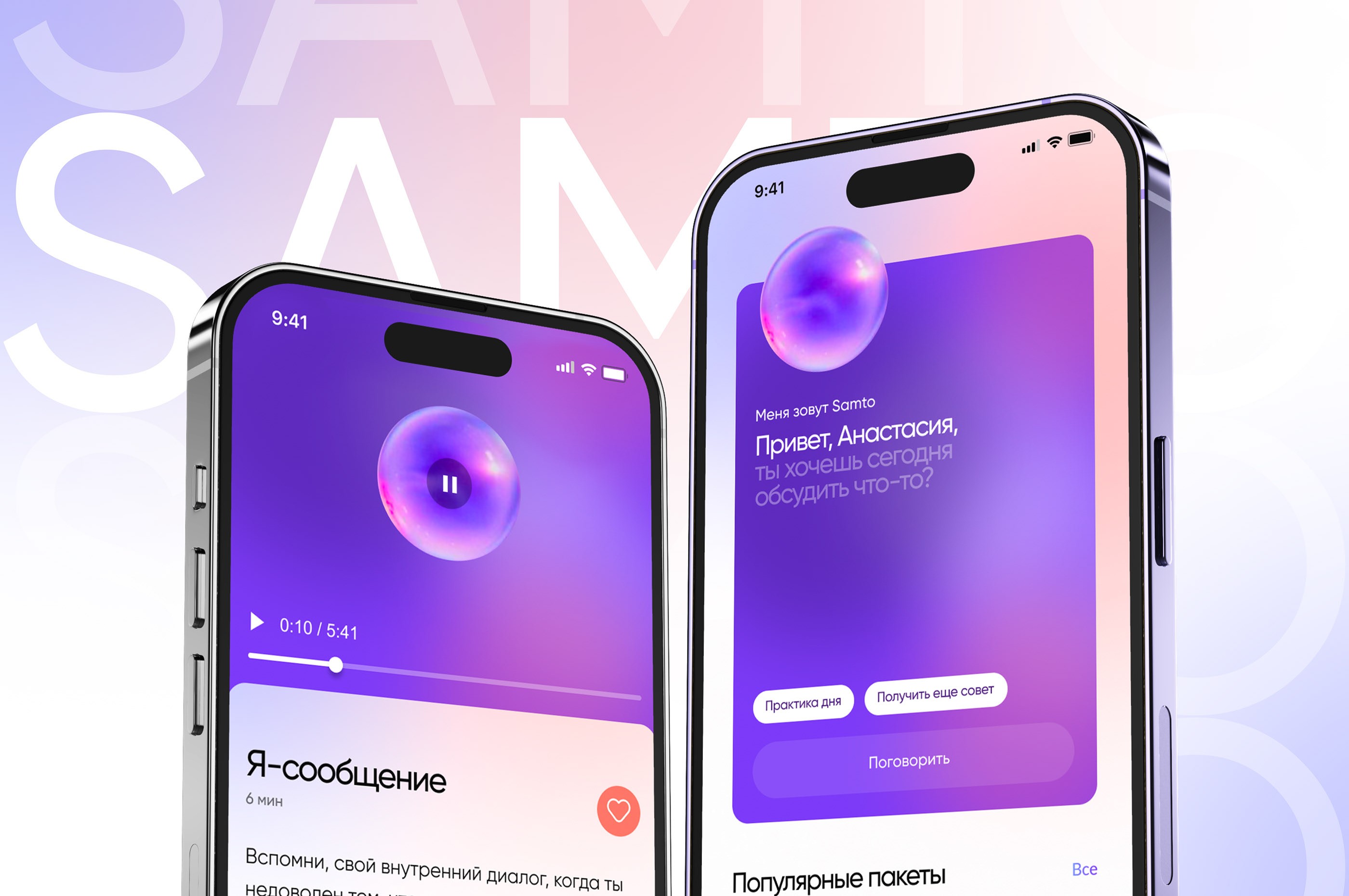
Samto is a mental wellness app that helps users improve their emotional state through mood tracking, interactive tools, and an AI-powered assistant. The founding team needed more than UI screens — they needed UX strategy, visual identity, and iterative product thinking to go from concept to a scalable product.
The Challenge
When the Samto team came to us, they were developing their MVP and needed help turning early product hypotheses into a coherent experience:
- Feature prioritization — Understanding what matters most to users
- Onboarding and retention — Building an intuitive structure that creates daily habits
- Emotional branding — Creating a brand that resonates in the mental health space
Market Research and UX Hypotheses
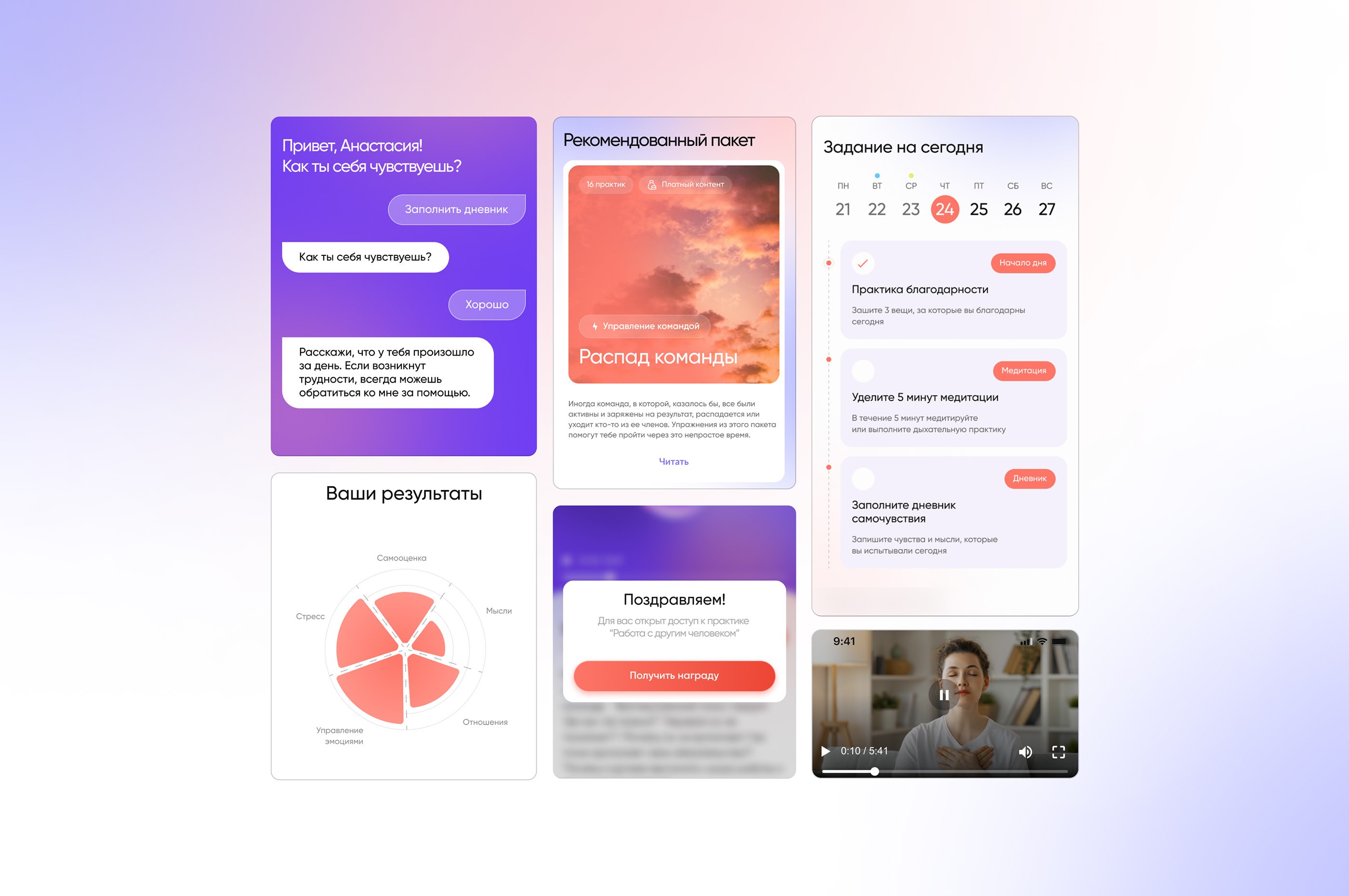
Before designing anything, we conducted deep competitive and user research:
- Pattern analysis — Studied UX patterns in leading mental wellness and self-help apps
- Pain point mapping — Identified key triggers users experience in onboarding and mood-tracking tools
- Feature prioritization — Proposed MVP features based on user needs and feasibility
- Flexible architecture — Designed an app structure allowing new features to integrate later
Branding That Feels Like Emotional Support
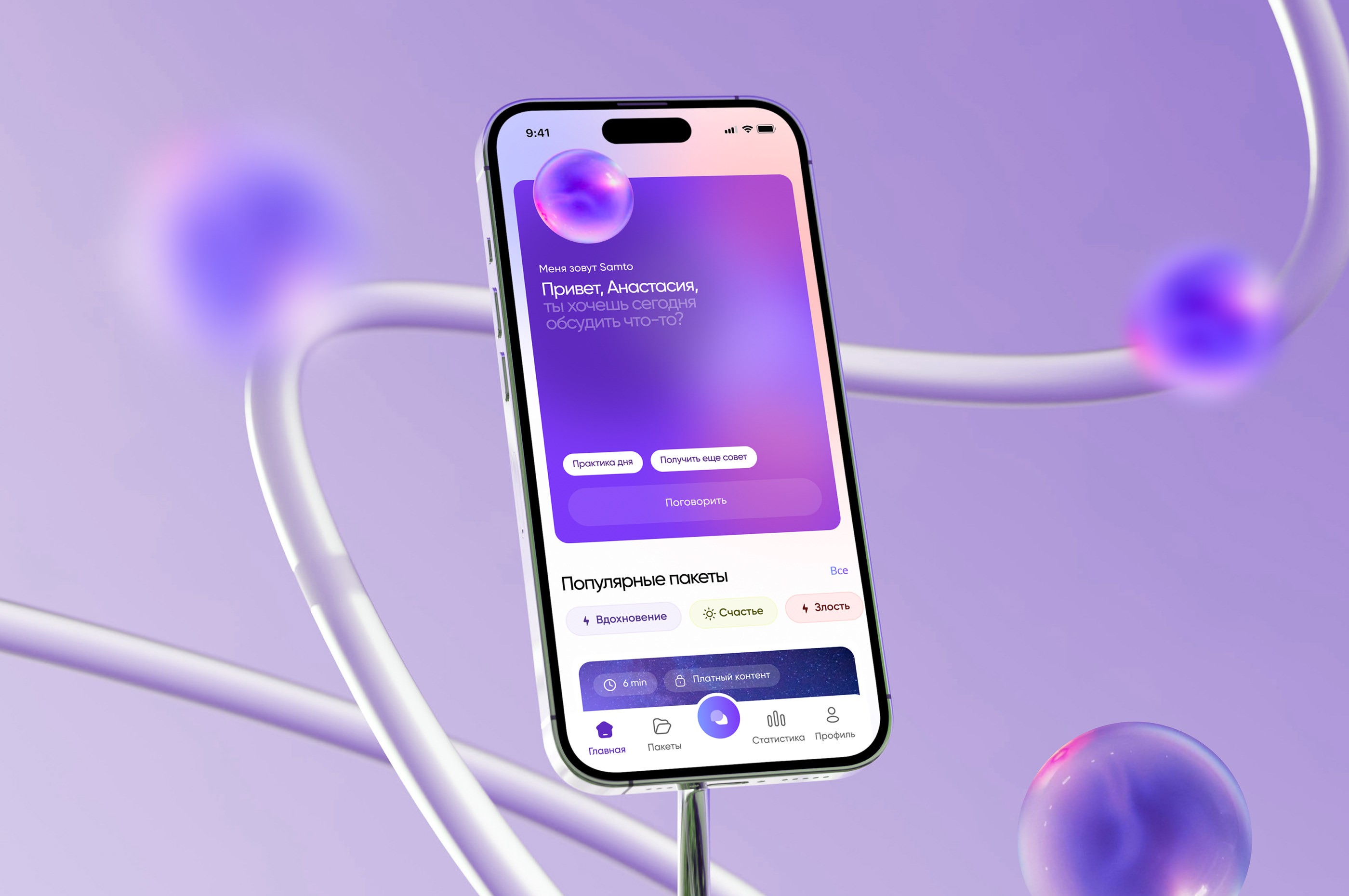
In wellness tech, trust and tone matter as much as functionality. We crafted a visual identity that:
- Communicates calm and safety through soft gradients and light effects
- Evokes mental recharge using energy visuals and warm color transitions
- Centers on a glowing energy core as the visual metaphor for the AI assistant
UX Design Rooted in Real User Flows

We mapped the entire user journey from download to daily habit:
- Customer Journey Map — From first app open to regular mood tracking
- Friction point identification — Designed around every potential drop-off
- Optimized User Flow — Clarity and engagement across the entire app experience
- Competitor benchmarking — Found emotional tone and onboarding clarity to be the biggest differentiators
UI Design with Motion and Emotion

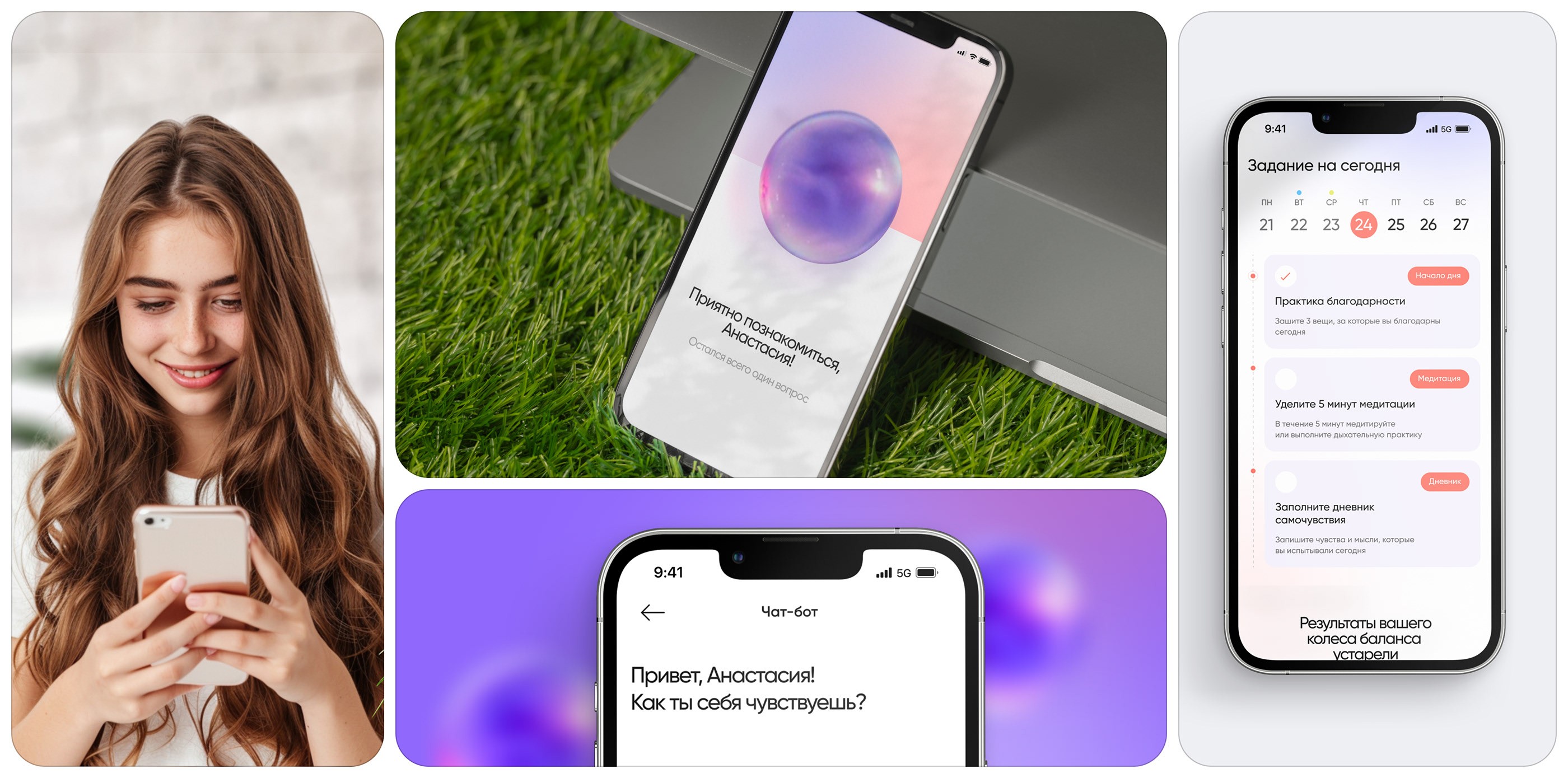
We translated UX flows into a fully interactive interface:
- Light-filled gradients with smooth animations and soft edge interactions
- AI assistant as energy orb that visually responds to user needs
- Accessible typography and layout designed for calmness and readability
Website for Market Education and Conversion
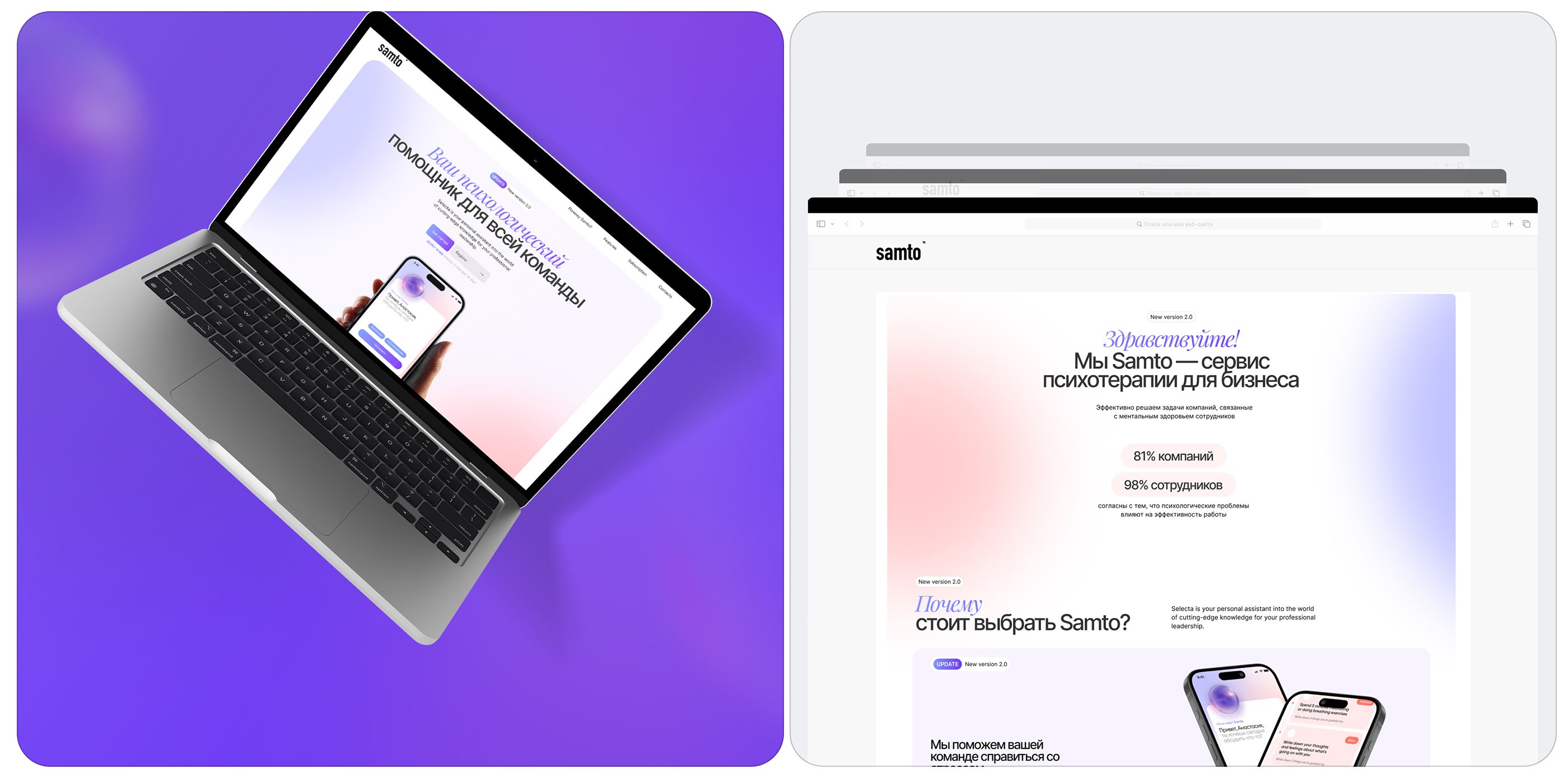
To support growth and acquisition, we designed the marketing site with:
- Brand-aligned messaging about the app’s benefits
- Trust-building design based on user psychology
- Flexible landing structure supporting future A/B testing and content campaigns
V2 Optimization Based on Real User Feedback
One year after launch, the Samto team returned for improvements. We:
- Analyzed behavioral data from early users
- Improved navigation and added user-requested features
- Conducted iterative user testing to validate UX updates
Results
- Unique visual identity that sets Samto apart in the crowded wellness market
- User-centered app flow tested through real usage patterns
- Marketing website that effectively communicates benefits and drives downloads
- Optimized V2 based on direct user feedback
- Scalable design system allowing future features to integrate easily
Frequently Asked Questions
How long did the MVP design take?
Initial MVP design and brand work took 4-6 weeks. The V2 optimization was handled in agile sprints one year after launch, based on real user feedback.
What made Samto's branding different from other wellness apps?
We used gradients, light effects, and a glowing energy core metaphor for the AI assistant — creating a visual identity that feels like emotional support rather than clinical software.
How was user research conducted for this project?
We combined competitive analysis of leading mental wellness apps, user behavior pattern research, feature prioritization based on feasibility, and post-launch behavioral data analysis for V2.
Like this work?
Let's discuss your project — we'll prepare a strategy and estimate within 48 hours.
Book a Call