Fitness Studio Branding That Tripled Partner Inquiries
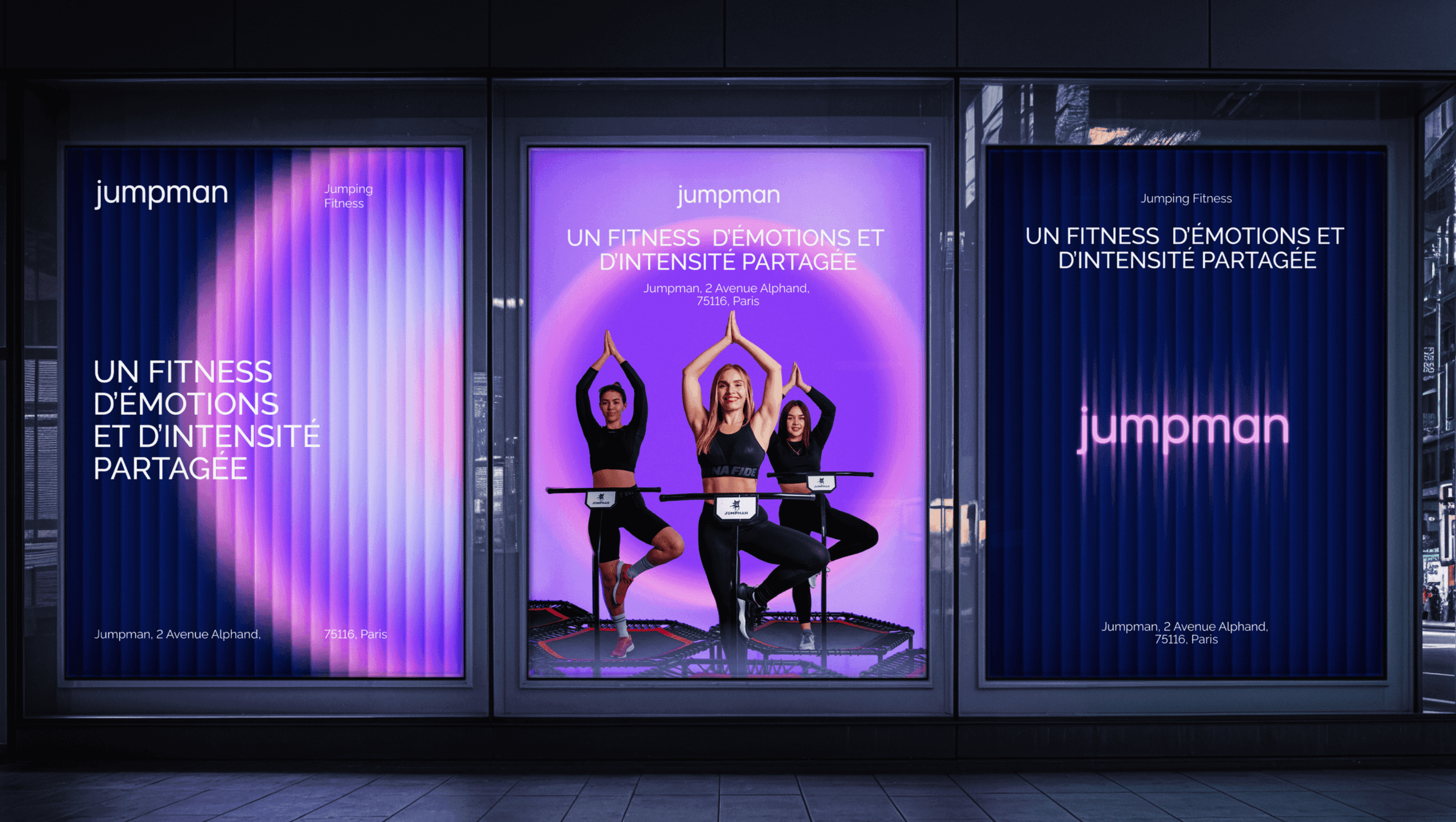
Jumpman is a trampoline fitness studio in Paris, founded in 2016. They needed a complete rebrand and a new website to support franchise expansion across France — a digital presence that would attract both fitness clients and potential franchise partners. The existing brand had served them well as a single location, but it lacked the visual sophistication and systematic structure needed to scale into a franchise network.
The Challenge
Jumpman had three problems holding back growth:
- Outdated brand identity — the existing visual style couldn’t scale beyond a single location
- No franchise-ready assets — potential partners had nothing professional to evaluate
- Dual audience — the website needed to convert both B2C (class bookings) and B2B (franchise inquiries) without confusing either group
The franchise problem was especially pressing. Interested partners had been reaching out, but without a professional brand presentation, investment details, or a structured onboarding process, most conversations stalled before getting serious.

Brand Strategy & Positioning
Before any design work, we ran a full brand strategy sprint:
- Competitive analysis of the Paris fitness market
- Audience segmentation — individual clients vs. franchise partners
- Brand positioning around Jumpman’s unique energy and community culture
This phase shaped every decision that followed. The competitive analysis revealed that most Paris fitness brands leaned into either clinical minimalism or aggressive street aesthetics. Neither captured what makes Jumpman distinctive — the atmosphere, the lighting, the performance quality of every session. That gap became our opportunity.

Brand Identity — “Phantom Stage” Concept
We developed three brand directions:
- Energy, Power in Motion — urban, graffiti-inspired
- Neon Beats — high-energy nightlife aesthetics
- Phantom Stage — theatrical, elegant, expressive
Jumpman chose Phantom Stage. The concept reframed fitness as performance — participants aren’t just working out, they’re on stage. This idea resonated because Jumpman sessions genuinely feel like shows — coordinated lighting, music drops, instructor choreography — and the brand needed to reflect that experience.

Their mascot — a bulldog — was reimagined as a dramatic “Phantom” character with a flowing cape, theatrical lighting, and dynamic gradients. A spotlight became the core graphic element across all brand touchpoints, from business cards to social media templates to franchise presentation decks.

Website Design for Two Audiences
The website serves two distinct user journeys:
- For clients (B2C): clear booking flow, class schedules, studio atmosphere — optimized for mobile
- For franchise partners (B2B): business model overview, investment details, and a professional inquiry form
UI features smooth animations, intuitive navigation, and immersive visuals tied to the theatrical brand identity. We designed the navigation so that the two paths never cross — a fitness client exploring class options is never distracted by franchise investment information, and a potential partner is never shown booking prompts. For the deep dive on how the website performed after launch, see the Jumpman website redesign case study.


Franchise Toolkit & Brand Guidelines
To support scalable franchise rollout, we delivered:
- Bilingual brand guidelines (English and Russian)
- Ready-to-use social media and marketing templates
- Franchise presentation deck for partner onboarding
The brand guidelines document covered everything a new franchise location would need: logo usage rules, color specifications, typography hierarchy, photography style direction, and template files for common marketing materials. The goal was to make it possible for a new location to produce on-brand materials without hiring a designer for every piece. This is the same principle behind our approach to brand identity vs. performance creative — building a system, not just a look.

Results
- Brand recognition — Jumpman stands out in Paris’s competitive fitness market with a distinctive theatrical identity
- Franchise interest — professional brand presentation tripled partner inquiries
- Higher conversions — dual-purpose website increased both class bookings and franchise leads
- Scalable system — brand guidelines and asset library enable consistent rollout to new locations


Frequently Asked Questions
How did the theater concept solve the dual-audience problem?
The theatrical framing — drama, shadows, Phantom-style aesthetics — communicated intensity for athletes while making the experience aspirational and Instagram-worthy for newcomers. It raised perceived experience value while lowering the intimidation barrier.
How long does a complete rebranding and web design process take?
Typically 2-4 months depending on scope. Jumpman's comprehensive transformation — brand strategy, identity, mascot redesign, website, and franchise toolkit — was achieved within 2-3 months.
Why design for franchise expansion before opening the first franchise?
Retrofitting brand consistency is expensive. Building a scalable system (guidelines, templates, signage specs, digital assets) from day one means every future location launches with brand consistency built in — without a designer making decisions at every step.
Like this work?
Let's discuss your project — we'll prepare a strategy and estimate within 48 hours.
Book a Call