B2B Lead Gen: From €11 to €2.75 Per Lead
How two B2B brands cut cost per lead by 3-4x with creative testing and full-stack production. Real CPL data from restaurant POS and private school campaigns.
The default state of B2B lead generation is overpaying. Most campaigns launch with 2-3 ad variations, run them for a few weeks, and accept whatever cost per lead the algorithm delivers. When CPL is too high, the response is usually to increase budget or switch platforms — neither of which addresses the actual problem.
The actual problem is almost always creative. The ads are not compelling enough, the messaging does not match the audience’s real pain points, and the production quality does not build trust. Fix the creative, and CPL drops — sometimes dramatically.
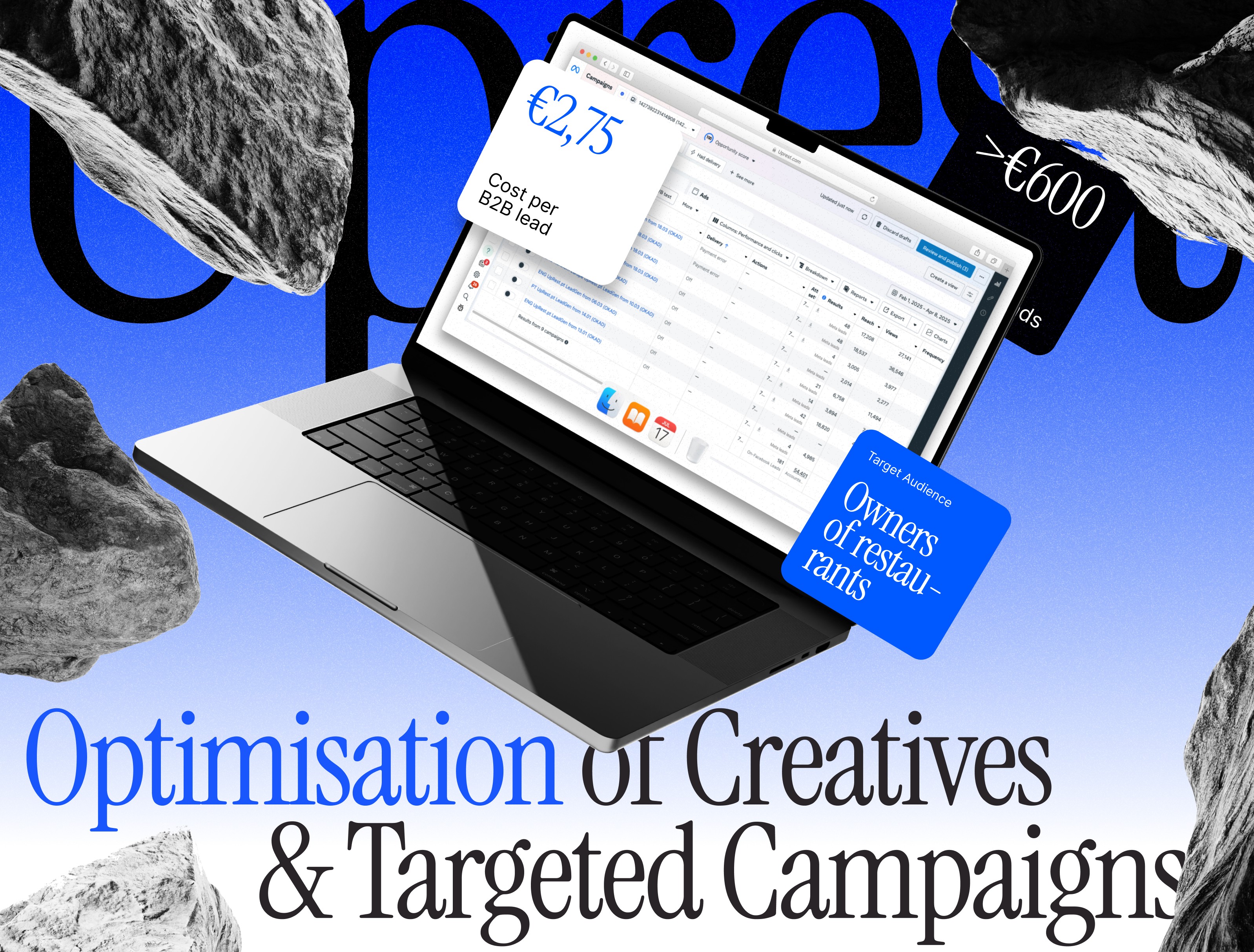
Two B2B campaigns demonstrate this. Uprest, a restaurant POS software launching in Portugal, cut CPL from €10.97 to €2.75 — a 3x+ improvement. Tisa School, a private IB school in Lisbon, generated 100+ qualified parent leads at €2-5 each against a tuition price of €1,500 per month. Both campaigns achieved these numbers through creative production and testing, not through media buying tricks.
Why Most B2B Campaigns Overpay for Leads
B2B lead generation has a structural problem: the people managing campaigns and the people creating ads are usually different teams (or different agencies) with different incentives.
The media buyer optimizes targeting, bids, and audience segments. The creative team produces assets based on a brief, delivers them, and moves on. Nobody owns the feedback loop between ad performance and creative iteration.
The result is predictable:
- Too few variations. Most B2B campaigns launch with 3-5 ad creatives. That is not enough to find a winner — it is barely enough to test one hypothesis.
- Slow iteration. When ads underperform, new creative takes 2-4 weeks to produce. By then, the campaign has burned budget on underperformers for a full month.
- Generic messaging. B2B ads tend to describe features rather than articulate specific pain points. “Streamline your operations” is not a hook — “Cut food waste costs by 30% in 60 days” is.
- No video. Many B2B companies still default to static image ads because video production seems expensive and slow. This is a competitive disadvantage — video consistently outperforms static in B2B on Meta and LinkedIn.
The fix is not a better media buyer. It is a production system that generates enough high-quality variations to test properly, iterates fast enough to capitalize on winners, and includes video as a default format.
Case 1: Uprest — From €10.97 to €2.75 Per Lead
Uprest is a restaurant POS and back-office software company that was launching in the Portuguese market. They needed to generate leads for a product that combined point-of-sale hardware with AI-powered food cost management — a complex value proposition for a market that is notoriously difficult to reach through digital advertising.
The starting point: CPL of €10.97 from initial campaigns. Not catastrophic, but not sustainable for a market-entry strategy.
The goal: Reduce CPL while maintaining lead quality, and build a pipeline fast enough to justify the market entry.
What We Built From Scratch
Uprest did not come to us with existing creative assets. We produced the entire marketing stack:
- Pitch deck — For direct sales conversations and investor meetings.
- One-pager — A single-page overview for email outreach and follow-ups.
- 20+ social media posts — Organic content to build presence and test messaging.
- Video ads — Multiple variations with different hooks, angles, and CTAs.
- AI-generated creatives — Supplemental visual assets for rapid testing.
The key differentiator in the offer was the combination of free POS hardware plus AI food cost control software. Most restaurant POS companies charge for hardware upfront — Uprest’s model removed that friction, and this became our primary ad angle.
The Creative Testing Process
We produced video ads in under 120 minutes each. This speed was intentional — it allowed us to test more variations without the budget and timeline constraints of traditional video production.
The testing structure:
- Hook testing. 5 different opening frames for each core message. The hook determines whether someone watches the ad — it is the single highest-leverage element.
- Angle testing. Same product, different pain points: “Reduce food waste” vs. “Eliminate manual inventory counts” vs. “Free hardware, smart software.”
- Format testing. Static images, animated graphics, live-action video, screen recordings of the POS interface. Each format reaches different segments of the audience.
- CTA testing. “Book a demo” vs. “Get free hardware” vs. “See pricing” — each CTA attracts leads at different stages of intent.
The Speed Factor
The first campaign went live within 7-10 days of engagement. This is unusually fast for B2B, where campaign launches typically take 4-6 weeks due to creative production bottlenecks, approval cycles, and platform setup.
Speed matters for two reasons:
- Data compounds. Every day of campaign runtime generates optimization data. Starting 3 weeks earlier means 3 additional weeks of learning.
- Pipeline is time-sensitive. In B2B, a lead generated today is worth more than a lead generated next month — the sales cycle is already long enough without adding marketing delays.
Results
- CPL dropped from €10.97 to €2.75 — a 3x+ improvement
- First campaign live in 7-10 days
- Video ads produced in under 120 minutes each
- Full creative stack built from scratch (pitch deck, one-pager, 20+ posts, video ads)
The CPL reduction came almost entirely from creative optimization. The targeting, budget, and platform remained the same — better ads drove the improvement.
Case 2: Tisa School — 100+ Leads at €2-5, €1,500/Month Tuition
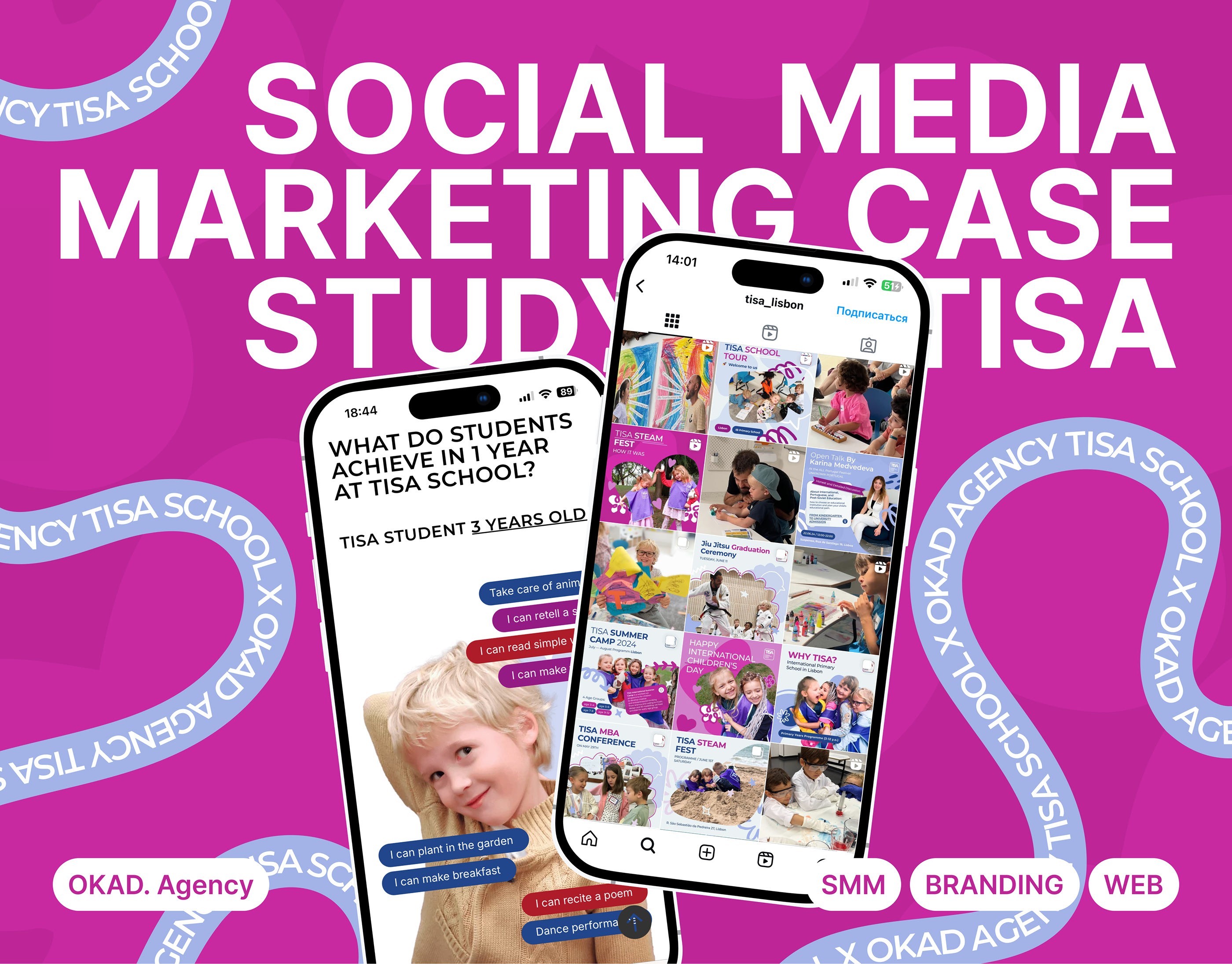
Tisa School is a private IB (International Baccalaureate) school in Lisbon targeting international families. The economics of this campaign are worth highlighting: each enrolled student represents €1,500/month in tuition revenue — roughly €18,000 per year. A €2-5 cost per qualified lead is extraordinary against that LTV.
The challenge: Reaching international parents in Lisbon who are actively looking for English-language private schools. This is a niche audience with high intent but low volume.
The constraint: Schools are emotional purchases. Parents need to trust the institution, see the environment, and feel confident about the educational quality. Static ads do not convey this.
The Full-Stack Approach
Unlike Uprest, Tisa School needed more than ad creative. The entire digital presence needed to support lead generation:
- Website redesign — The existing site did not communicate the IB curriculum, facilities, or teaching quality. We rebuilt it to serve as a conversion-focused landing experience.
- Chatbot — An automated qualification flow on the website that captured parent inquiries 24/7 and routed them to admissions.
- Email automation — Nurture sequences for parents who inquired but did not schedule a visit. Education purchases have long consideration periods — automated follow-ups kept Tisa School top-of-mind.
- Content calendar — Ongoing social media content showing daily school life, student activities, and teaching moments.
- Lead management system — Tracking every inquiry from first touch to enrollment decision.
The Content Engine: WhatsApp to Instagram
The most effective content source was unexpected: teachers sharing daily photos and videos via WhatsApp.
Here is how the pipeline worked:
- Teachers captured moments throughout the school day — classroom activities, art projects, outdoor learning, student achievements.
- These raw photos and videos were shared to a dedicated WhatsApp group.
- Our team curated, edited, and formatted the best content for Instagram, Facebook, and the website.
- The resulting content was authentic, timely, and impossible to replicate with stock photography.
This approach solved the biggest challenge in school marketing: showing the real environment. Parents want to see actual classrooms, actual teachers, and actual students (with appropriate permissions) — not staged photo shoots that happen twice a year.
Results
- 100+ qualified parent leads at €2-5 each
- Full digital stack — website, chatbot, email automation, content calendar, lead management
- Ongoing content pipeline from teacher-generated WhatsApp content
- ROI context: Each lead at €2-5 represents a potential €18,000+/year enrollment
What Drove the CPL Down: The Common Factors
Both campaigns achieved CPL numbers well below industry benchmarks. The common factors:
1. Creative Volume and Variation
Uprest launched with 20+ social posts and multiple video ad variations. Tisa School had a continuous content pipeline. Both campaigns had enough creative volume to test properly — not 3 ads hoping one works, but 10-20+ variations designed to find winners systematically.
2. Video as Default Format
Both campaigns used video as the primary ad format. Video communicates complex value propositions faster than static images:
- Uprest: Screen recordings of the POS interface, explainer videos about food cost control, testimonial-style content about free hardware.
- Tisa School: Real classroom footage, campus tours, teacher introductions, student activity highlights.
Video also has structural advantages on Meta: lower CPMs, higher engagement rates, and better retargeting audiences (video viewers are more qualified than link clickers).
3. Speed of Execution
Uprest’s first campaign launched in 7-10 days. Tisa School’s content pipeline produced new assets daily. Speed matters because:
- You start collecting data sooner
- You iterate faster based on performance signals
- You build pipeline while competitors are still in production
4. Full-Stack Production
Neither campaign treated ad creative in isolation. Uprest got a pitch deck, one-pager, social posts, and video ads — all with consistent messaging. Tisa School got a website redesign, chatbot, email automation, and lead management.
When every touchpoint delivers the same message, conversion rates improve at every stage of the funnel. A prospect who sees a compelling ad, lands on a professional website, interacts with a helpful chatbot, and receives a relevant email sequence is far more likely to convert than one who sees a good ad and lands on a mediocre page.
How to Apply This to Your B2B Campaign
Step 1: Audit Your Creative Volume
Count your active ad variations right now. If the number is under 10, you are not testing — you are guessing. Aim for 15-20 active variations across 3-4 distinct angles.
Step 2: Add Video
If you are running static-only campaigns, video is your fastest path to CPL reduction. Start with simple formats: screen recordings, talking-head explainers, customer testimonials. Production speed matters more than production value — a clear message in a simple format outperforms a polished video with a weak hook.
Step 3: Test Hooks First
The first 3 seconds of a video ad (or the headline of a static ad) determine whether someone engages. Test 5-10 hook variations before optimizing anything else. This is the highest-leverage testing you can do.
Step 4: Build the Full Stack
Ads drive traffic. What happens after the click determines whether that traffic converts. Audit your landing pages, forms, follow-up sequences, and lead management process. The best ads in the world cannot overcome a broken post-click experience.
Step 5: Compress Your Timeline
If your current campaign launch process takes 4-6 weeks, cut it in half. Identify the bottlenecks — usually creative production and approval cycles — and systematize them. Every week of delay is a week of leads not generated.
The Bottom Line
B2B lead generation costs are not fixed. They are a function of creative quality, variation volume, and iteration speed. Uprest cut CPL by 3x through better creative — same budget, same platform, same audience. Tisa School generated 100+ qualified leads at €2-5 each for a €1,500/month service.
The pattern is consistent: invest in creative production, test systematically, move fast, and build the full stack. The algorithm rewards better ads with lower costs. Your job is to give it better ads to work with.
Questions people ask
What is a good cost per lead for B2B?
It depends on your average deal value. For Uprest (restaurant POS software), we achieved €2.75 per lead. For Tisa School (€1,500/month tuition), we hit €2-5 per qualified parent lead. As a benchmark, most B2B SaaS companies pay €15-50 per lead on Meta. If your CPL is above €10, there is likely room for significant improvement through creative and messaging optimization.
How long does it take to launch a B2B lead gen campaign?
Uprest's first campaign went live within 7-10 days of engagement, including pitch deck creation, one-pager design, video ad production, and campaign setup. Speed matters in B2B — every week of delay is a week of pipeline not being built. A full creative stack can be produced in 2-3 weeks when the process is systematized.
Do video ads work for B2B lead generation?
Yes. In the Uprest case, video ads were the primary driver of the CPL reduction from €10.97 to €2.75. Video communicates complex B2B value propositions faster than static images — especially for software products where showing the interface in action removes abstraction. Each Uprest video ad was produced in under 120 minutes.
What is full-stack creative production for B2B?
Full-stack means producing every asset a B2B campaign needs: pitch decks, one-pagers, social media posts, video ads, landing pages, email sequences, and chatbot flows. Tisa School's campaign included website redesign, chatbot, email automation, content calendar, and lead management. Unified production ensures consistent messaging across every touchpoint.
How do you reduce cost per lead without increasing budget?
Three levers: creative variation testing (5-10 versions of each ad with different hooks, visuals, and CTAs), audience refinement based on conversion data, and landing page optimization. Uprest's 3x CPL improvement came primarily from creative testing — same budget, better ads. The fastest wins usually come from hook and opening-frame testing, not targeting changes.