Can AI Replace UGC Creators? An Agency's Honest Take
Can AI replace UGC creators? An agency's honest take from 50+ campaigns — where AI already wins, where creators are irreplaceable, and the hybrid approach.
We manage campaigns that use AI-generated creatives and campaigns that use UGC creators. Sometimes both in the same ad account. We have spent nearly $500K on AI-versus-UGC testing for a single client, produced AI content for baby furniture and jewelry brands, and hired hundreds of creators across our roster of 626 for traditional UGC.
We do not have a philosophical position on this question. We have a P&L.
Here is what we have learned about where AI replaces creator production, where it cannot, and why the honest answer is more nuanced than either side wants to admit.
What AI Actually Replaces Today
Let us be specific. “AI replacing UGC creators” is too vague to be useful. AI replaces specific production tasks, not the entire creator role. Here is what it handles right now, with real examples.
Product Photography and Lifestyle Scenes
Dadada Baby: 40+ AI-generated lifestyle product images across 6 channels. Cost: under $700. Traditional equivalent: $3-8K per photo shoot, with 20-30 variations per session impossible at any reasonable budget.
The AI produced nursery scenes, lifestyle contexts, and product compositions that are indistinguishable from studio photography. No child models, no studio rental, no stylist, no scheduling coordination. The creative director set the direction, and the AI executed.
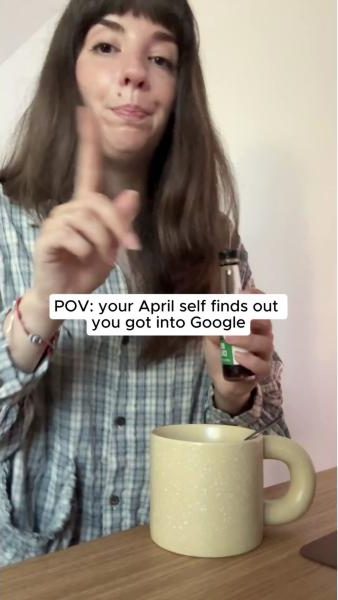
This is the clearest replacement case. A UGC creator adding nothing beyond “here is the product in a nice setting” is doing a job that AI does faster, cheaper, and with more variation. If the value a creator provides is purely visual context for a physical product, that value is being commoditized.
Short-Form Video Animation
Jewelry brand: 12-18 posts and videos monthly for 6-7 months using the key frame method — hand-composed key frames with AI (Seedance) animating between them, producing 4-6 second clips. This eliminated the need for Parisian location shoots entirely.
US publisher: Book trailers using the same method. Six posts generated 12,354 likes, 551 reposts, and 449 comments. The technique brought illustrated key frames to life in a way that traditional motion graphics could not match at the same cost.
Shuggle: A viral 2-character concept built from 7 hand-drawn key frames. The AI animated character interactions that would have required either expensive 2D animation or live-action shoot with actors.
In all three cases, the AI replaced production labor — not creative direction. An art director still composed every key frame. The AI handled the expensive middle step of turning still compositions into motion.
High-Volume Ad Variations
Five Brands: 80 fresh ad creatives from existing footage. Zero new shoots. When you need to fight creative fatigue at scale, AI-assisted editing and generation produces the variation volume that no creator roster can match at the same cost.
ZenToes: 60+ ad variations without new footage. Same principle — the creative direction existed, and AI multiplied it across enough variations to sustain aggressive testing cadences.
This is not about replacing a creator. It is about eliminating the need to reshoot when you need variation 47 of a winning concept. That is a production efficiency gain, not a creative replacement.
What AI Cannot Replace
Authentic Human Experience
Lookalikey: 9 UGC videos, 3 creators, ROAS 2.20. A dating app requires real people sharing real stories about connection. There is no AI shortcut for “I downloaded this app and met someone who changed my life.” The viewer needs to believe the story, and belief requires a real human.
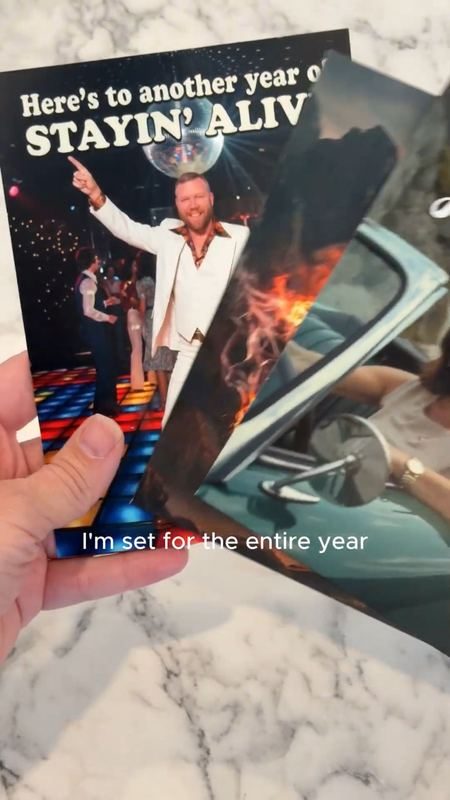
This is not a temporary limitation. It is structural. AI can generate a photorealistic person saying words about a dating app, but the viewer’s subconscious is evaluating sincerity, not visual quality. The same principle applies to:
- Health supplement testimonials (does this person actually use this product?)
- Fitness transformation stories (is this result real?)
- Skincare before/afters (do I trust this person’s skin journey?)
- Financial product reviews (has this person actually achieved this outcome?)
In every trust-dependent category, the fundamental value of UGC is not the video production — it is the human credibility behind it. AI cannot manufacture credibility.
Niche Authority and Cultural Context
A UGC creator who is a registered dietitian reviewing a supplement brings credentialed authority that no AI persona can replicate. A creator who is a known voice in the sneaker community reviewing a shoe brand brings audience trust that exists independently of the brand.
This layer of creator value — the trust they have earned with a specific audience before the brand ever contacted them — is immune to AI disruption. It is not a production skill. It is a relationship asset.
Genuine Emotional Reactions
SmallTalk2Me (language learning app): 2-4M impressions per video creative. The content that drove engagement showed real people struggling with pronunciation, getting feedback, and improving. AI cannot replicate the micro-expressions of frustration, surprise, and satisfaction that make learning content relatable.
A creator nervously attempting a difficult phrase and then smiling when they get it right is a two-second moment that no prompt can engineer. Viewers recognize authenticity at a level that is below conscious analysis.
The Hybrid Model: Where the Industry Is Actually Going
The most interesting results come from combining AI and creator content strategically. This is not a compromise — it is an optimization that outperforms either approach alone.
Example: Alcohol Brand (Godka)
Godka used real bartender footage for core brand shots — authentic hands making cocktails, genuine bar environments, real pouring technique. Then AI-generated cocktail visuals extended that authentic base into a scalable social content pipeline, driving 200K-900K views per post.
The real footage provided credibility. The AI visuals provided volume. Neither alone would have achieved both.
Example: InstaHeadshots Performance Split
InstaHeadshots ran 695 ads with $471,970 in spend. AI statics outperformed UGC on CPA by 11% ($54.45 vs $61.01). The top AI concept hit ROAS 2.26.

But this was an AI headshot app — the AI creative was a live product demo. The lesson is not “AI beats UGC.” The lesson is “match the format to the product.” For InstaHeadshots, AI statics were simultaneously the ad and the proof. For a supplement brand, that dynamic does not exist.
The Emerging Pattern
Across 50+ campaigns, the pattern that emerges is:
| Funnel Stage | Best Format | Why |
|---|---|---|
| Prospecting (cold) | AI creatives | Volume, testing velocity, pattern interruption |
| Consideration (warm) | Hybrid | Product visuals + creator credibility |
| Conversion (hot) | UGC | Trust, social proof, personal stories |
| Retention | Both | Product updates (AI) + community (creators) |
Brands that use AI exclusively leave trust-building on the table. Brands that use UGC exclusively cannot test at the volume required to optimize. The highest-performing accounts run both.
What This Means for UGC Creators
The honest forecast:
Roles being displaced:
- “Person holding product in nice lighting” — AI does this better and cheaper
- Basic product demonstration without personal narrative — replaceable
- Stock-footage-style lifestyle content — already replaced
- Simple unboxing without personality or insight — commoditized
Roles becoming more valuable:
- Creators with genuine expertise in a niche (licensed professionals, experienced practitioners)
- Creators with built audience trust in a specific category
- Creators who bring authentic personal stories that connect to product categories
- Creators with strong on-camera presence, comedic timing, or storytelling ability
- Creators who can produce content that requires complex human interaction, emotion, or spontaneity
The shift is from “person who can hold a product and read a script” to “person whose authentic experience and audience relationship makes the content credible.” This is a higher bar, but it is also a more defensible and better-compensated position.
The Production Cost Reality
Here is the economic comparison that drives decisions:
| Production Task | AI Cost | Creator Cost | Winner |
|---|---|---|---|
| 40+ product lifestyle images | Under $700 | $3-8K per shoot | AI |
| 60-80 ad variations | Batch generation | Multiple shoots | AI |
| 12-18 monthly social posts | Key frame pipeline | Recurring retainers | AI |
| Authentic testimonial video | Not viable | $150-500/video | Creator |
| Expert review content | Not viable | $200-1,000/video | Creator |
| Story-driven brand content | Uncanny valley risk | $300-800/video | Creator |
The cost differential for production tasks is dramatic — 60-80% savings on product visuals and variation generation. But notice that the highest-value creator content (expert reviews, authentic testimonials, story-driven pieces) has no viable AI alternative at any price.
Our Honest Take
After managing campaigns on both sides:
-
AI is replacing production tasks, not creators. The distinction matters. Lighting a product shot is a production task. Sharing a genuine experience with a product is a creator role. AI handles the first. It cannot handle the second.
-
The “AI will replace everything” crowd is selling tools, not running campaigns. When your revenue depends on AI adoption, every use case looks like an AI opportunity. When your revenue depends on campaign performance, you use whatever works — and sometimes that is a $400 creator video, not a $50 AI generation.
-
The “AI will never replace creators” crowd is protecting turf, not looking at data. Dadada Baby’s 40+ AI images under $700 replaced photo shoots. That is a real displacement. Pretending it is not happening does not help creators adapt.
-
The hybrid model wins. Not as a diplomatic compromise, but as a measurable performance outcome. AI for volume and testing, creators for trust and conversion. The ratio varies by product, but pure AI or pure UGC is almost never the optimal strategy.
-
Creator value is shifting upstream. The future belongs to creators who bring something AI cannot generate: genuine experience, niche authority, audience trust, and authentic human presence. The production skills (lighting, editing, filming) are becoming table stakes. The human skills (storytelling, credibility, cultural fluency) are becoming premium.
The question is not whether AI can replace UGC creators. It can replace some of what some creators do. The real question is whether individual creators are building the kind of value that AI cannot replicate. For those who are, the opportunity is growing, not shrinking.
Questions people ask
Can AI fully replace UGC creators?
No. AI replaces specific production tasks — product photography, lifestyle scene generation, video animation — but cannot replicate authentic human experience, emotional storytelling, or genuine product reactions. The brands getting the best results use AI for what it does well and creators for what they do well.
What parts of UGC production can AI replace right now?
Product lifestyle photography (40+ images under $700 vs $3-8K shoots), short-form video animation using key frames (4-6 second clips), background and scene generation, and high-volume ad variation production (60-80 variations from existing assets). These are production tasks, not creative tasks.
Will AI make UGC creators earn less?
It will reshape what creators are paid for. Commodity tasks like basic product photography or simple unboxing videos will face downward price pressure. But creators who bring genuine storytelling, niche authority, personal audience trust, and authentic on-camera presence will become more valuable — not less — as AI floods the market with generic content.
How should UGC creators adapt to AI?
Focus on what AI cannot do: share genuine personal experience with a product, bring niche expertise, build authentic audience relationships, and create content that requires real human emotion. Creators who evolve from 'person holding product' to 'trusted voice in a specific category' are future-proof.
What is the hybrid AI-UGC model?
Use AI for scalable production tasks (product visuals, scene generation, variation testing) and real creators for trust-building content (testimonials, demonstrations, personal stories). For example, one alcohol brand used real bartender footage for core shots and AI-generated cocktail visuals for social content extensions — combining authenticity with volume.