AI Product Photography vs Traditional Shoots
AI product photography costs under $700 per session vs $3,000-8,000 for traditional shoots. Real cost, speed, and quality comparison with case data.
A brand selling premium baby furniture needs visuals for six sales channels. Each channel wants different formats, different moods, different staging. The traditional route: rent a designed nursery, hire a photographer, style six setups, and budget $3,000-8,000 per session. Reshoot when a new finish launches. Reshoot when a retailer wants a different crop.
Or spend under $700 on an AI session and get 20-30 variations in days.
This is not a theoretical comparison. We ran both approaches across multiple product brands and tracked the numbers. Here is what we found about when AI product photography outperforms traditional shoots, when it does not, and how to decide for your brand.
The Cost Breakdown: Real Numbers
The pricing gap is the headline, but the details matter more than the total.
Traditional product photography session:
- Studio rental: $500-1,500/day
- Photographer: $800-2,000/day
- Styling and props: $300-800
- Product shipping/handling: $200-500
- Post-processing: $500-1,500
- Total: $3,000-8,000 per session
- Output: 10-20 final images
AI product photography session:
- Source material preparation: included
- AI generation and iteration: included
- Art direction and quality control: included
- Total: under $700 per session
- Output: 20-30 variations
For Dadada Baby, a premium nursery furniture brand selling through their DTC site, Amazon, Walmart, Target, Babylist, and Wayfair, we produced 40+ lifestyle images across all six channels. Total product shoots: zero. Every image was built from real customer photos — cribs and dressers in actual nurseries — with AI generating new rooms, lighting, and staging around them.

Speed: Days vs Weeks
Traditional shoots have a logistics problem that no amount of budget solves. You need to coordinate schedules, ship products, set up, shoot, tear down, edit, retouch, and deliver. Minimum timeline: 2-4 weeks from brief to final files.
AI production compresses this to 2-5 days:
- Day 1: Brief alignment and source material review
- Day 2-3: Generation rounds with art direction
- Day 4-5: Revisions, final delivery
But speed is not just about the first delivery. The real advantage is iteration. When Dadada launched a new finish, we generated matching lifestyle images in days. When a retailer requested specific aspect ratios or styling changes, we adapted existing scenes without starting from scratch. Traditional shoots cannot do this — every significant change means rebooking everything.
Quality: Where AI Wins and Where It Doesn’t
AI product photography is not universally better or worse than traditional. It is better at some things and worse at others. Knowing which is which saves you from expensive mistakes in either direction.
AI excels at:
- Lifestyle and contextual imagery (products in rooms, on tables, in use)
- Seasonal variations (same product, different holiday/seasonal styling)
- Multi-channel adaptation (different crops, backgrounds, moods from one session)
- Rapid A/B testing of visual concepts before committing to a full shoot
- Scaling output without scaling cost
Traditional excels at:
- Close-up product detail (stitching, texture, material grain)
- Exact color accuracy for print catalogs
- Products with complex reflections (chrome, glass, polished metal)
- Lifestyle shots requiring real human interaction (hands holding a product, someone using it mid-action)
- Catalog-standard white-background shots for marketplace compliance
We applied the same AI approach to Godka, an alcohol brand, generating cocktail visuals that extended their existing production shoot output. The results drove 200K-900K organic views per post — numbers their traditional shoots alone could not sustain at that publishing cadence.
The Process: How AI Product Photography Actually Works
There is a misconception that AI product photography means typing a prompt and accepting whatever the model generates. That produces generic, unusable results. Here is what actually happens in a professional session.
Step 1: Source Material Audit
We start with what exists. Customer photos, previous shoots, product renders, even packaging shots. The quality of the source determines the ceiling of the output. For Dadada Baby, customer-submitted photos were ideal — they showed the furniture in real, lived-in environments, which gave the AI authentic starting points.
Step 2: Art Direction Brief
Before any generation begins, we define the visual system. For Dadada Baby, the target audience was NYC moms — design-conscious, aesthetically driven. That shaped every decision: warm lighting, minimal clutter, modern interiors, soft color palettes. Without this step, AI produces technically competent but brand-irrelevant imagery.
Step 3: Generation and Iteration
Each session produces 20-30 variations. Not 20-30 random outputs — 20-30 intentionally directed variations testing different environments, lighting conditions, and compositions. The art director reviews each round and adjusts prompts, reference images, and parameters.
Step 4: Channel-Specific Adaptation
A hero image for the DTC site needs a different mood than a product listing on Amazon. Marketplace images need cleaner backgrounds and more prominent product placement. Social ads need vertical crops and visual hooks. We tailor each output to its destination.
When to Use AI, When to Shoot, When to Do Both
The smartest brands are not choosing one or the other. They are using both strategically.
Use AI product photography when:
- You need high volume across multiple channels (like Dadada’s 6-channel requirement)
- You launch new SKUs frequently and cannot afford per-SKU shoots
- You need seasonal or campaign-specific variations of existing products
- Your budget is under $2,000 and you need more than 10 images
- You want to test visual concepts before investing in a full production
Book a traditional shoot when:
- You are launching a flagship product and need hero shots for press and homepage
- Your product’s value is in its physical details (material quality, craftsmanship close-ups)
- You need images with real people interacting with the product
- Marketplace compliance requires specific white-background standards your AI setup cannot match
Use both when:
- Run a traditional shoot for hero shots and close-ups, then use AI to extend those shots into dozens of lifestyle variations
- This is what Godka did: professional cocktail photography as the base, AI to multiply the output for a content calendar requiring multiple posts per week
The Economics at Scale
The per-session cost comparison tells part of the story. The full picture emerges when you look at annual production needs.
A brand publishing across 3 platforms, updating content monthly, with 4 seasonal campaigns per year needs roughly 200-400 images annually.
Traditional only: 10-15 shoot days at $3,000-8,000 each = $30,000-120,000/year AI only: 12-20 sessions at under $700 each = $8,400-14,000/year Hybrid (recommended): 2-3 traditional shoots + 10-15 AI sessions = $14,000-30,000/year
The hybrid approach gives you the precision of traditional photography where it matters and the scale of AI everywhere else. It is not about replacing photographers — it is about deploying each method where it delivers the most value per dollar.
What Source Material You Need to Start
You do not need a professional photo library to begin. Here is the minimum:
- 3-5 clear product photos from any source (customer photos, phone shots, previous shoots)
- Brand guidelines or at least a mood board (colors, aesthetic direction, target audience)
- Channel specifications (where the images will be used, what sizes and formats)
Customer photos often work better than studio shots as source material. They show products in real contexts, which gives AI more authentic material to build from. Dadada Baby’s entire 40+ image library started with photos customers had already posted — cribs in actual homes, not staged showrooms.
Common Mistakes to Avoid
Having produced AI visuals for multiple brands across different product categories, these are the errors we see most often.
Mistake 1: Skipping art direction. Feeding product photos into an AI tool without a clear visual brief produces generic imagery. The AI generates technically competent images that look like stock photography — usable but not brand-building. Invest the first day in defining mood, lighting, composition rules, and audience context before generating anything.
Mistake 2: Treating AI as a complete replacement overnight. Brands that shut down their entire traditional production pipeline in favor of AI often discover gaps — a flagship product launch still needs hero close-ups, a retailer demands white-background shots that AI renders imperfectly. Transition gradually. Start with one channel or one content type.
Mistake 3: Ignoring per-channel requirements. Amazon product listings, Instagram ads, and DTC hero banners have different composition needs. A single AI-generated image resized three times looks like a single AI-generated image resized three times. Each channel deserves its own treatment from the start. For Dadada Baby, every channel’s output was composed independently — the Amazon version and the DTC version of the same crib looked like different shoots.
Mistake 4: Not building a visual system. One-off AI sessions produce one-off results. The real value comes from establishing reusable brand rules (like the jewelry brand’s three rules: never centered, real textures, side lighting) that make every future session faster and more consistent.
Bottom Line
AI product photography is not a gimmick and it is not a replacement for all traditional shoots. It is a production method that costs 75-90% less per session, delivers in days instead of weeks, and scales without proportional cost increases. For lifestyle imagery, multi-channel adaptation, and high-volume content needs, it outperforms traditional photography on every metric except one: precise physical detail rendering.
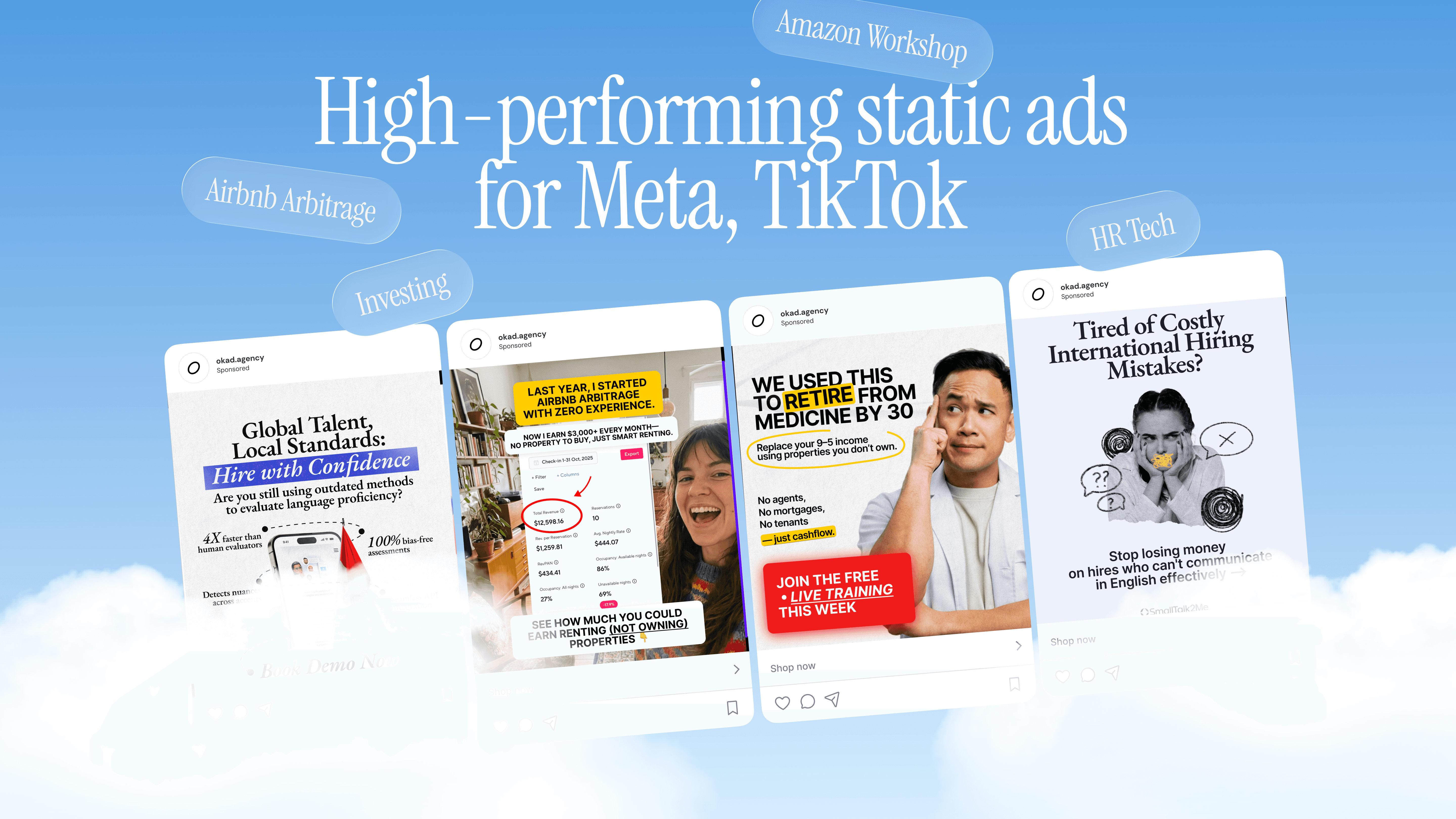
The performance data backs this up beyond cost savings. Brands using AI-generated visuals in their ad creative — from Dadada Baby’s multi-channel lifestyle imagery to Godka’s cocktail content pulling hundreds of thousands of organic views — are not seeing a quality penalty. In the InstaHeadshots case, AI-produced static creatives outperformed UGC talking-head videos on cost per acquisition by 11%, spending nearly half a million dollars across 695 ads.
The brands getting the best results are not choosing sides. They are using AI for volume and variation, traditional for precision and hero moments, and spending their saved budget on more creative concepts instead of more shoot days.
Questions people ask
How much does AI product photography cost compared to traditional?
An AI product photography session typically costs under $700 and produces 20-30 variations. Traditional studio shoots run $3,000-8,000 per session for a comparable number of finals, before retouching. The gap widens when you factor in logistics — studio rental, styling, shipping product samples.
Can AI product photography replace traditional shoots entirely?
For lifestyle and contextual imagery, yes. We produced 40+ images for Dadada Baby across 6 sales channels with zero product shoots. But AI struggles with precise technical details — thread counts on fabrics, reflections on glossy metal, exact color matching for print. Use traditional for hero product shots and catalogs where millimeter accuracy matters.
What source material does AI product photography need?
Customer photos, existing product shots, or even 3D renders. The higher the quality of your source, the better the output. For Dadada Baby, we used real customer-submitted nursery photos as the base — actual furniture in real rooms — then built new scenes around them.
How long does an AI product photography session take?
From brief to deliverables, an AI session runs 2-5 days depending on the number of variations and review cycles. Traditional shoots require 2-4 weeks including pre-production, the shoot day, and post-processing. AI also lets you iterate — if you want a different room color or season, that's hours, not a reshoot.
Which product categories work best with AI photography?
Furniture, home goods, baby products, food and beverage, and fashion accessories see the strongest results. These categories benefit from lifestyle context — showing products in aspirational environments — where AI excels. Categories requiring precise material rendering (fine jewelry close-ups, technical gear) still favor traditional for hero shots.